The Power of Empathy

Ben Haack
The following post is from Special Olympics Australia athlete Ben Haack, a long-time athlete advocate and public voice of the movement.

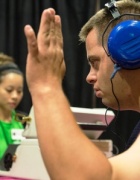
Hi, my name is Ben Haack.  I’m an Athlete Leader from Australia.  I have been involved in Special Olympics for fourteen years.  I have Aspergers, which is commonly known as ASD.  I’m writing about a very powerful commodity in Special Olympics and that’s called Empathy.

The usual method I use to bring about Empathy is to tell people of what my life was like before I joined Special Olympics.

Where should I start?

The first sixteen years of my life usually horrify people.  I’ll start with the worst day of my life.

A day before that worst day, I got my nose broken by a kid on the bus.  I fought back and beat him up pretty badly.

The next day, I went back to school and faced up to my fate.  The thing is, that kid was in a grade lower than me, which meant that there would be hell to pay.  I actually had to convince my family I can go to school, seeing as my nose was in bad shape and they knew that it was likely I would get beaten up badly.

Well, come lunchtime it was on.  I was eating lunch with a few people when a group of about six or seven students jumped me.  They held me as they hit me repeatedly in the face and stomach.  Well, I got so fed with this that I fought back again.  I managed to throw five of them off me, before I smacked this kid hard and threw him against the door.  I then turned around only to get fly kicked in the face!

Lunchtime finished and I went to class.  I sat in the classroom, bleeding profusely, my shirt ripped, and with a really good black eye!

I was called up to the principal’s office at the end of the day.  I went down to the office, full of dread.  Well, the principal proceeded to give one of those lectures where you feel very small and weak.  He then ended it with the line:  ‘I’m going to make your life a living hell!”

Well something changed in me at that moment.  I proceeded to tell him to shove that up somewhere where the sun doesn’t shine!  He then repeated the same line.  I then said that never in a million years could he do anything to make my life any worse than it already was.  I then proceeded to go through it with him, how suspending me would mean I would not get beaten up, how giving me detention would mean I was in a safe place, how making me do gardening or running laps would also mean I was in a safe place, etc.

Well, I’m fully convinced that was the day I got diagnosed.  I believe that this day put me onto the path of becoming the person I’m today.

But here’s the important bit.  This is not about me.  This is about the fact that in every country in the world, there are people out there who are getting treated this way or worse.  There are a lot of young men, in particular, who also get thrown around every school in their area and quite often end up being home schooled. And there are an awful lot of people like me who end up in prison, the Psych Ward, homeless, oron drugs.

I know this, because I work with a lot of young men who are going through this, and I have seen some of the research that is out there on Aspergers, ADD, ADHD, ODD.  In other words, people in the ASD spectrum.

Now when I got diagnosed, the stats read that there was one of me to every 1000 people.  Now in Australia it reads one of me to every 100 people.  In America it’s 1 to 88, and Korea 1 to 66!  So, what do you expect is going to happen to the vast majority of these people, who from the moment there are placed in mainstream school, get an education, in abuse, disrespect, neglect?  This usually leaves them with anger management, suicidal tendencies, and mental health issues!  Now, of course that’s if they even get to go to school.

So you see you’re not going to help people like me if the vast majority of Special Olympics programs are based in special schools.  We need to expand somehow, no matter how difficult.

This is why we have to be fearless and relentless.  For me, the reminder of why I have to dig up my worst moments, because I truly don’t want to, is when I work with people with ASD and I get to see them come to the program with black eyes, how they get suspended all the time, how they get shifted to different schools all the time, or there at home doing nothing, being nothing, because the world is saying that is what they are!

Now I know I’ve so far only talked about one disability so far, which some would consider a mistake, but we all have a point of reference, somewhere where we start.

Believe me; people with Down syndrome and Autism don’t exactly have the whole world as their oyster neither.

So, remember that if we can get the Politicians to get their Politician’s hat off, if we can get the Teachers to take their Teacher’s hat off, if we can get the Carers, Psychologists, Nurses, wider world, etc to take their hats off and put on the hat of being a parent, brother of sister and looked at the world of disability from that point of view, then believe me, things will change.

You see, what I’m trying to do is to be more than just about myself and what I’ve been through.  I’m trying to use that to remind people of the power of empathy, which simply means putting yourself in that person’s position and asking yourself: ‘How would I feel?”  If we can get people to successfully do this, then watch what happens.

It’s not an easy assignment doing this, but if we use our athletes and their stories correctly, if we empower them to have a voice, if we truly make this an athlete centred movement, then we have that commodity, empathy, we just need to bring that out of others!  So, bring on the Athletes!

Posted in Uncategorized | 5 Comments

11 Months and 12 Teeth Extractions Later, Athlete Shines on the Court

This slideshow requires JavaScript.

Kenny Canon, 34, was smiling ear to ear when he found out his basketball team had no losses that season and had qualified for the Special Olympics Wisconsin State Indoor Sports Tournament in April. Judging from Kenny’s smile, it’s hard to believe that just 11 months ago, this all-star athlete couldn’t focus on the game because he was nearly paralyzed by tooth pain.

“He had toothaches, was in a lot of pain and said he was dizzy,” said Kenny’s mother, Shirley. “He told me he thought he was going to die.”

It’s every parent’s worst nightmare to see a child in pain. It’s even worse when you can’t make them feel better. It wasn’t until Kenny went to the State Summer Games in June 2012 that volunteer dentists screened his oral health at Special Smiles, a Special Olympics Healthy Athletes® discipline which seeks to improve, through better health, each athlete’s ability to train and compete.

During the event, Kenny was flagged as needing urgent dental care. Three weeks later, SOWI teamed up with the Wisconsin Dental Association (WDA) and WDA Foundation to provide free critical dental care to Kenny at the WDA Mission of Mercy, an event that helps people like Kenny who have limited financial resources or are unable to visit a dental office.

It was at Mission of Mercy that dentists extracted 12 of Kenny’s teeth with hopes of providing dentures in 12 months if they had healed.

“It is difficult for anyone to lose so many teeth. There are social and psychological aspects to take into consideration, but after discussing the options and expectations to Kenny, we were able to see that he would be able to tolerate this,” said Dr. Kyle Menne, who performed the extractions. “Replacing these teeth with removable prosthetic teeth is important to help improve his esthetics, chewing function, etc.”

In April, Kenny returned to the dentist for the first time since his extractions when he visited Special Smiles in April. That’s where he had a surprise encounter.

“He got to see to see the very same dentist who performed the teeth extractions at Mission of Mercy!” exclaimed Shirley.

“It was very important that we were able to see Kenny at this April’s Special Smiles event because we were able to follow up with him to see how he was doing,” said Dr. Menne. According to Dr. Menne, Kenny should be able to receive dentures on his top teeth at the Mission of Mercy event this June.

“It just scares me thinking about what could have happened if he hadn’t found out about Healthy Athletes and Mission of Mercy,” said Shirley. “He probably could have died his teeth hurt so badly. I think about that a lot.”

Posted in Uncategorized | 2 Comments

Family Health Forums Bring Communities Together

Matt Fitzgibbons and family (left); Becky Walley and family (right)

Matt Fitzgibbons and family (left); Becky Walley and family (right)

Organized as part of the Special Olympics Healthy Athletes program and often funded by grants from global partner Lions Clubs International, Family Health Forums are held to provide family members crucial information on caring for their loved ones with intellectual disabilities and give them the all-too-rare opportunity to ask questions from experts. In 2012, Programs put on 27 family health forums in 20 countries around the globe. Below is the story of how a forum in Wisconsin impacted the lives of two families.

On April 17, Special Olympics Wisconsin (SOWI) families and their community members gathered to broaden their knowledge of health and wellness and learn more about the support SOWI provides to people with intellectual disabilities (ID) at a Family Health Forum in Sparta. For Matthew Fitzgibbons, a Army/Reserve, Master Sergeant, and Equal Opportunity Advisor, and Sexual Assault Response Coordinator for the Fort McCoy Garrison, the Family Health Forum was a great educational opportunity for his whole family.

“The main reason [I went to] the Family Health Forum was to educate and open my kids eyes to those with intellectual disabilities and also to have us, as a family, volunteer,” he said.

SOWI offered a variety of activities and learning opportunities, including a session about Sensory Processing Disorder led by Niki Froelke, COTA/L and owner of Sensory Lovin’ Momma in La Crosse. Youth and individuals with ID in attendance discussed the Spread the Word to End the Word™ campaign (which seeks to eliminate the use of word “retard” or “retarted”) and helped brainstorm activities to engage youth at Fort McCoy’s upcoming summer camp.

For Becky Walley, a Child, Youth, and School Services Outreach Director, School Liaison Officer and mother of two, the R-word discussion was very beneficial. “I thought it would be a good experience for my older child to get involved and learn about helping/supporting the Spread the Word to End the Word campaign,” she said.

“My kids had educated me earlier in the year when I did use the R-word, so it was good that there was education on that subject at the forum,” agreed Fitzgibbons.

Walley and Fitzgibbons both agree it is important for military families to be aware of the resources SOWI provides.

“The military is not immune to intellectual disabilities. Education and providing lines of support benefits everyone,” said Fitzgibbons.

Posted in Corporate Partners, Healthy Athletes, Uncategorized | 1 Comment

Defying Expectations

Editor’s Note: I’d like to share an email I received from Katie Seigenthaler, mom to George.  In corresponding with Katie after this email, she shared the impact that Special Olympics has had in George’s life.  She shared examples of attitude change she’s seen change in her community and spoke about the joy her family has found in Special Olympics saying it’s, “pure exaltation, and it’s infectious. You come away thinking, ‘This is what sports should be all about – and this is what life should be all about.’”

I couldn’t agree more, save for one detail.  The impact of Special Olympics doesn’t come from anything we do alone – it is inspired from the determination and bravery of George and millions like him; from the courage and fortitude of Katie and all the family members like her.  As you’ll read, to say George’s life to date has been one of defying expectations is an understatement.  In that, George is Special Olympics.  I know you’ll enjoy his story, I hope you will also share it and join me in wishing George a very Happy 16th Birthday, and many more!

-T

——————————————————————

George Matthew Seigenthaler Hayes is 16 Years Old!

If that seems hard to fathom, it should!

We’re talking about the boy who did nothing but seize for the first 20 months of his life; who was among the first children to undergo a hemispherectomy, the then-highly risky procedure to end intractable seizures by removing half the brain; who was diagnosed with leukemia at age 9; who was given a death sentence after he contracted pneumonia due to the cancer treatment protocol; who went on to survive three years of brutal chemotherapy only to wind up with severe osteoporosis; and who, over the course of 2 the two years following treatment, endured major reconstructive surgery on his hips and broke his legs 5 times.

Well, that “poor little fella”, as my grandmother would have said, is now merely the Ghost of Georgie Past. These days, he is loving life and living large. He wolfs down everything within reach – and is even eating a lot of meals with only minor help, a sight which is blissfully disgusting to watch. He loves high school and is so popular he’s getting a swelled head about the whole thing. In fact, he’s a chick magnet – the girls flock to him begging for high-fives so the boys fight over who gets to push him around. But when I say “push”, don’t get the wrong idea – he’s also spending more and more time on his feet and learning how to bear weight and walk again with assistance – something we were told not to expect after all the insults to his bones after cancer treatment. Well, the doctors may have told us that, but they forgot to tell George – and, as we’ve come to expect, he’s elected to defy the odds yet again.

In fact, Georgie is emerging as the only bona fide athlete in the Seigenthaler-Hayes family. There is no sport he won’t try, no athletic endeavor he’s won’t pursue. No fear. No trembling. Just do it. That’s how George rolls. (See pics attached) He’s a clutch player on all of his Special Olympics teams, recently starting as center for the SO New Trier basketball squad after being moved up from JV to V just 3 months prior. We’ve been warned by the coaches that visits from recruiters may be in the offing, but we’ll cross that bridge when we come to it.

Not all is perfect – after all, he is 16. The biggest battle we’re facing right now is he blithely mows down kids in the New Trier hallways with his power wheelchair, and thinks this is good humor. So the detention hours are piling up and a lot of our conversations these days begin with, “Georgie, how would you feel if…” Oh well! This is a problem I think we can live with.

To say that George has come a long way in 16 years would be the understatement of the 21st century. And as we mark this momentous and meaningful birthday, we’re also reminded of something that doesn’t need to be dissected or explained: ANYTHING is possible.

Happy Birthday George!!

Love,
Mom

This slideshow requires JavaScript.

Posted in Uncategorized | Tagged , , , | 12 Comments

Special Olympics at the Final Four

No one can escape March Madness in the U.S. – especially this year, which marked the 75th anniversary of the event. The Cinderella stories, the underdog teams that somehow find their way to the Sweet 16 against all odds that you can’t help but become a temporary fan of…and then there’s the Final Four – a weekend where fans are immersed in the sport they love.

And amongst the throngs of fans and frenzy of activities were the athletes of Special Olympics, holding “court” with the best of them.

The basketball-packed weekend kicked off in Atlanta with a clinic hosted by our partners at NCAA Division III. The Amherst College Lord Jeffs and University of Mary Hardin-Baylor Crusaders took a break from their busy Final Four schedules to volunteer at a Special Olympics basketball clinic, hosted by Emory University.

rgz-Final-Four-DIII-Special-Olympics-01

65 Special Olympics Georgia athletes spent the afternoon developing their ball-handling, shooting and defensive skills under the tutelage of the Amherst and Mary Hardin-Baylor student-athletes, as well as a handful of Emory student-athletes.

“We are so lucky and blessed that the NCAA has put on this big 75th Celebration. It is an experience of a lifetime for us student-athletes, and community service is an important part of it,” said Willy Workman, senior history major at Amherst. “To see so many athletes passionate about the game – it is really special to be able to lend a hand to others that also love to play basketball.”

rgz-Final-Four-DIII-Special-Olympics-06

Special Olympics North America’s “Coach” Annette Lynch joined DIII players in leading the clinic.

Read how Coach Todd Youngblood and eight of his Special Olympics Georgia athletes took “The Road Less Traveled” to the Final Four.

Read more about the clinic and watch this awesome video about how NCAA DIII student-athletes support Special Olympics all year-long!

Then, down in the Crescent City, Special Olympics Louisiana athletes got the clinic of a lifetime, as coaches and players participating in the NCAA Women’s Final Four in New Orleans, including six All-American players, teamed up with the Women’s Basketball Coaches Association for an afternoon of skills and drills.

women's-final-4-group-shot

Most women’s basketball fans would have done anything to trade places with our athletes, as such powerhouse players as Brittney Griner and Odyssey Simms of Baylor, Elena Delle Donne of Delaware, and Chiney Ogwumike of Stanford, lead the clinic, along with University of New Orleans women’s basketball Head Coach Keeshawn Carter and her staff, and members of the WBCA.

And last, but certainly not least, back up in Atlanta, current and former NCAA, WNBA and NBA all-stars joined six lucky Atlanta area athletes and six representatives from Special Olympics Founding Partner Coca-Cola of our first-ever Coca-Cola -  Special Olympics Unified Sports Experience basketball clinic at Bracket Town during the Men’s Final Four.

The event emcees were Kenny “the Jet” Smith (retired, NBA), Christian Laettner (retired, NBA) and Special Olympics Georgia athlete Matthew Wynne.

Special Olympics Georgia athletes Sherrie Ferguson, Kyle McEver, Rashad Richardson, Brittney Hagelthorn, Chip Ford and Tarcia Keys teamed up with Nicole Powell (current WNBA), Reggie Love (Duke 2001 Championship team), Dikembe Mutombo (retired, NBA and Special Olympics ambassador), Robert Horry, Jr. (retired, NBA), Ruth Riley (current WNBA) and Lindsay Whalen (current WNBA) and their Coca-Cola teammates for a head-to-head challenge between “Team Powerade” and “Team Coca-Cola.”

2013-USE-Final-Four

Team Powerade and Team Coca-Cola

Each team featured Coke, Special Olympics and celebrity players. The teams had to make it through a series of timed spot shots, obstacle courses and relays. With the score going back and forth, thanks to an all-out sprint by Marvin Vines of Coca-Cola (beating out the long legs Dikembe Mutombo no less), Team Powerade emerged victorious!

But in the true spirit of Special Olympics Unified Sports, everyone walked away a better athlete and person for having participated and shown the world the unifying power of sports.

See pics from the Unified Sports Experience.

Thanks to all the organizations, teams and players involved, it was a slam dunk of a weekend indeed!

Posted in Uncategorized | Tagged , , , , , , , , , , , , , , , , , , , , , , , , , | 2 Comments

We’re 99.5% the Same

This slideshow requires JavaScript.


Tom Golisano of the Golisano Foundation is the founding sponsor and major underwriter of the CGI Annual Meeting and a global partner of Special Olympics Healthy Athletes. This guest blog was written by Ann Costello, Director of the Golisano Foundation.

Last Friday night, Chelsea Clinton took the stage at Washington University in St. Louis to kick off this year’s Clinton Global Initiative – University (CGI-U). President Clinton later made remarks but it was Chelsea, in her high heels and jeans, who was very much the face of the conference. It became clear over the course of the weekend that President Clinton has largely passed the CGI-U mantle to his daughter, a symbolic gesture in terms of giving a voice to young people. What more appropriate venue to do this than CGI-U.

Every time I go to CGI-U, my faith is restored and renewed in the next generation. These students are intelligent. They’re creative, and they’re intrinsically motivated to leave the world a better place. Most important, they embrace diversity and difference. For the population we serve, this means great things for the future.

As he was moderating the panel discussion during the Opening Plenary Session on Friday night, President Clinton made a comment that deeply resonated with me. While talking about how the human genome was mapped during his presidency, he said he learned at the end that we’re all 99.5% the same. Most of the differences you see between two people are determined by the remaining .5%. Yet, we focus so much on that minute .5% that makes us different from one another instead of the 99.5% that makes us the same. We must help the world recognize that 99.5% in a much bigger way.

One way that I believe we’ll do this is through digital technology. Technology played an enormous role at CGI-U. From the app that CGI developed this year – which was first implemented at this year’s CGI-U – to people like Jack Dorsey explaining how technology is exponentially increasing the power of an individual, the digital age is here in a big way. As technology continues to be more deeply engrained in our everyday lives, CGI-U reminded me that we have to embrace it. The use of digital technology will level the global playing field and it has already started to do so for people with intellectual disabilities.

It also struck me how issues that people with intellectual disabilities face were represented on every panel and in every session I attended. From public health to education to poverty and human rights, each and every topic discussed aligned with problems people with intellectual disabilities experience on a daily basis. For me, seeing the way that these concerns were woven throughout weekend’s discussions reinforced the urgency and importance of having our voice represented and heard.

What was most powerful to me, though, was seeing and meeting the people whose stories we’ve heard about. I knew of William Kamkwamba, who dropped out of school after not being able to afford the $80 fee and learned to build a windmill of scraps and bamboo from a library book, bringing electricity and running water to his village. I had read about Shabana Basij-Rasikh, who was denied an education as a young girl in Afghanistan and dressed as a boy for years so she could keep going to school. We hear too many horrifying stories like these and we know their circumstances are real. But when you’re face to face with these individuals, their perseverance, their passion and their dedication is contagious. I was inspired by the caliber of world leaders of all ages who came together to encourage innovation, creation and revolution in their chosen fields. Like me, they too are convinced that they must find a way for all voices to be heard.

Speaking of voices being heard, I was joined at CGI-U by an incredible group of student leaders from the student chapters of the American Academy of Medical and Developmental Dentistry (AADMD). Motivated by Healthy Communities, a Golisano Foundation and Special Olympics initiative and 2012 CGI Commitment to Action, these students are collectively making a Commitment to Action to enhance healthcare for people with intellectual disabilities nationwide. Through asking fellow medical and dental students to form AADMD student chapters at their schools, they will advocate for curriculum changes to include experience and training on caring for people with intellectual disabilities, participate in and organize Healthy Athletes screenings, and spearhead Spread the Word to End the Word campaigns in their communities. These students are determined to improve access and quality of care for people with intellectual disabilities and they’re making changes where they see a root of the problem every day – in the way medical and dental students are trained and educated. The Golisano Foundation, Special Olympics and the AADMD are thrilled to be working with such an ambitious and devoted group of students as they take on this challenge – I’m so excited to see them realize their commitment in the coming months and years.

At CGI-U, I never walk away feeling overwhelmed at the end of the weekend. Even though the problems discussed are enormous, I always leave feeling energized by the commitment and enthusiasm of CGI-U students. This year especially, I was reminded that it’s important for all of us to take action and work towards a world of equality and justice because, after all, we’re 99.5% the same.

Image | Posted on by | Tagged , , , , | 2 Comments

BREAKING NEWS: Bank of America Features Special Olympics Champions on Broadway!

***BREAKING NEWS***

Thanks to  the support of Special Olympics’ Partner Bank of America, Special Olympics athletes Andy Miyares and Michel Kozoris will be featured this weekend on a jumbo screen in Times Square in New York City!

If you find yourself in New York City this weekend, the billboard will run from Saturday April 6 at 3 pm EDT until Monday, April 8 at 11:59 pm on the Marriott Marquis Hotel façade at the corner of 46th and Broadway.  Please take a photo  or video with the display and tweet, like, post and tag to any of the  social outlets listed below or to your own audience through your Twitter handle.

Facebook.com/BankofAmerica | @BofA_News | @BofA_Community | youtube.com/BankofAmerica

Facebook.com/SpecialOlympics | @SpecialOlympics |@SONorthAmerica

 Thanks to Bank of America, Andy and Michel will be seen by millions this weekend!

Andy Miyares

Andy Miyares

Michel Kozoris

Michel Kozoris

Posted in Uncategorized | 7 Comments